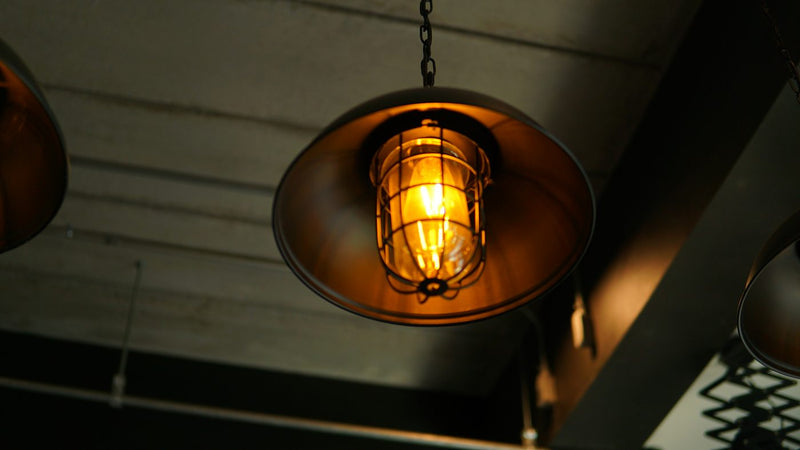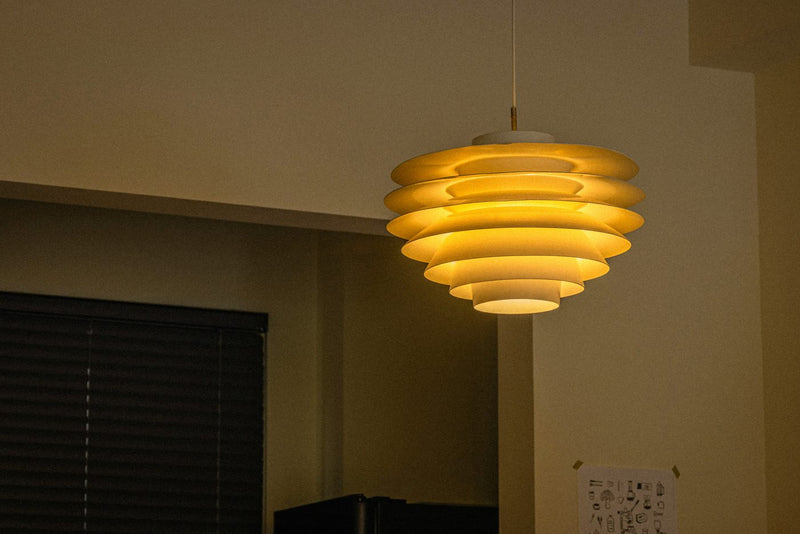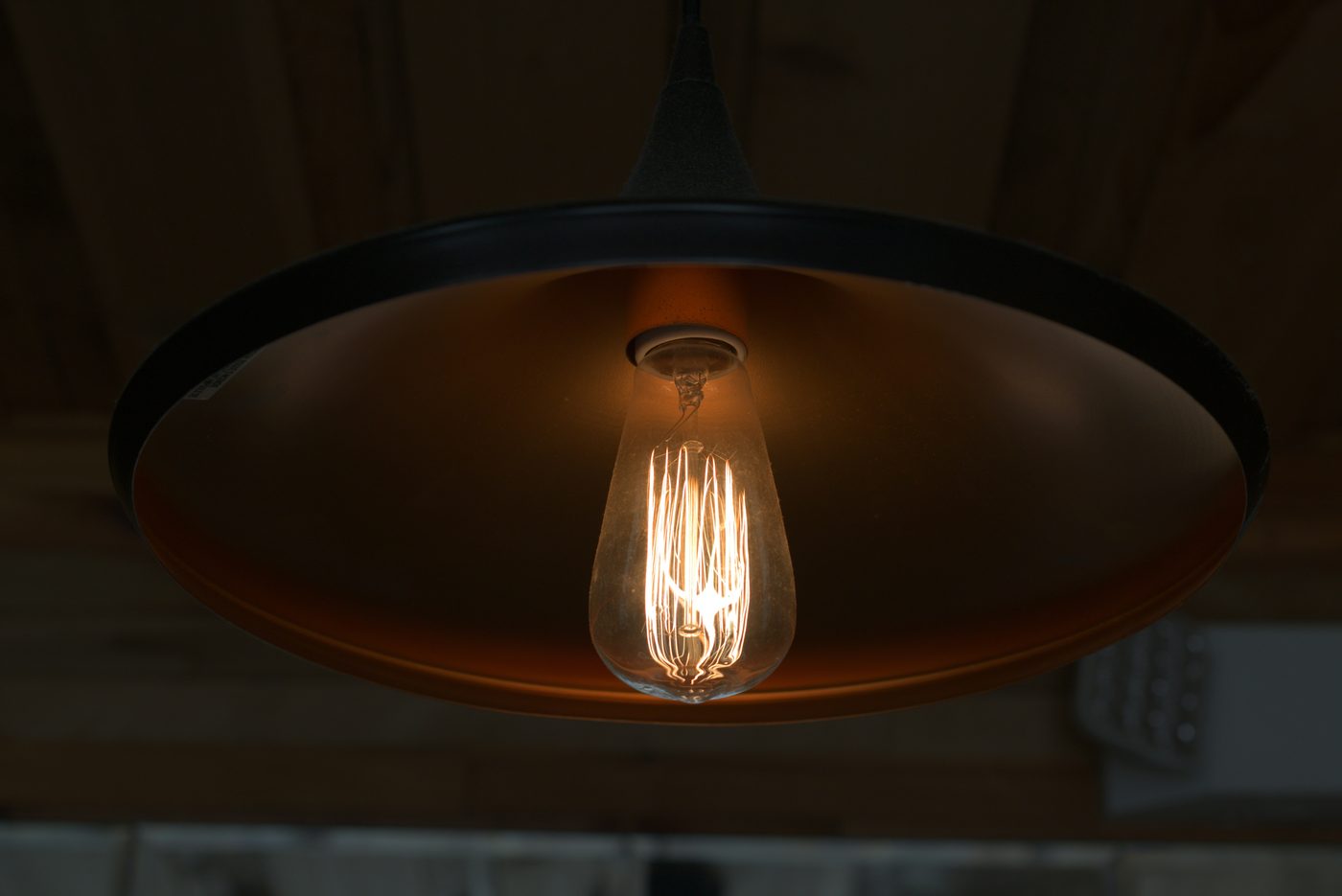
Two identical rooms, two identical lamps. One feels like an evening by the fire; the other like a dental surgery. The difference is one number on the side of the bulb box: colour temperature.
What the number means
Colour temperature is measured in kelvin. Lower numbers are warmer — more amber, closer to candlelight. Higher numbers are cooler — bluer, closer to daylight. Candlelight sits around 1800K, a traditional incandescent bulb around 2700K, and the cool white of an office or a petrol station forecourt at 4000K and above.
Why 2700K is the line
2700K is the colour of the old tungsten bulbs most of us grew up with, which is why it reads as 'normal' and everything cooler reads as slightly wrong indoors. For living rooms, bedrooms and hallways, 2700K or lower is the safe answer. Brass and wood are warm-toned materials, and warm light is what they were finished for — under a cool bulb, aged brass goes grey.
Reading the box
Three things matter. Kelvin: 2700K or below for living spaces. Lumens: the actual brightness — around 400–470 lumens replaces the old 40W bulb, which is plenty for a lamp in a layered room. CRI: how faithfully colours render; 90 and above keeps skin, timber and textiles looking like themselves.
A note on fittings
UK homes often use B22 bayonet fittings alongside the screw-in E27 and E14 common on new lighting. Check the cap type before you order bulbs — it is printed next to the kelvin rating — and if you dim, use a bulb marked dimmable with a trailing-edge dimmer.
The one-evening test
Swap the bulbs in one room to 2700K and give it an evening. It is the cheapest renovation there is.